
GEOMAGNETIC STORM FORECAST and 24 hours later a CME hit earth's magnetic field
GEOMAGNETIC STORM FORECAST: Minor G1-class geomagnetic storms are possible on Feb. 13th when a stream of solar wind is expected to hit Earth's magnetic field. The gaseous material is flowing faster than 500 km/s from an equatorial hole in the sun's atmosphere. Arctic auroras could spill into Valentine's Day. Aurora alerts: SMS Text.


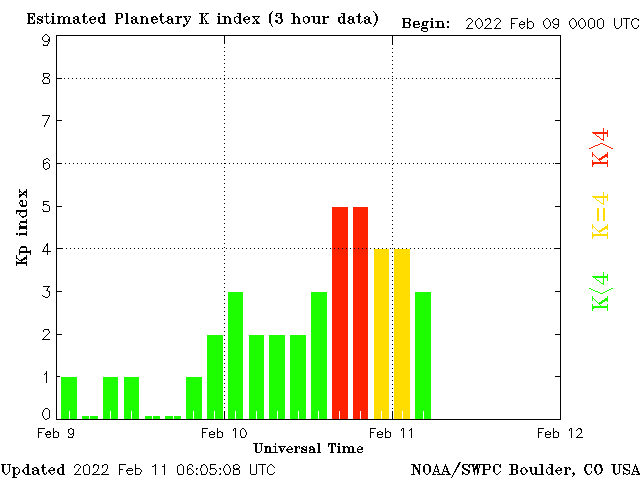
24 HOURS LATER: A CME hit Earth's magnetic field on Feb. 9th. The geomagnetic storm (category G1) erupted 24 hours later. "Auroras burst into life over the coast of Scotland," reports Alan C. Tough, who sends this picture from the seaside village of Hopeman:
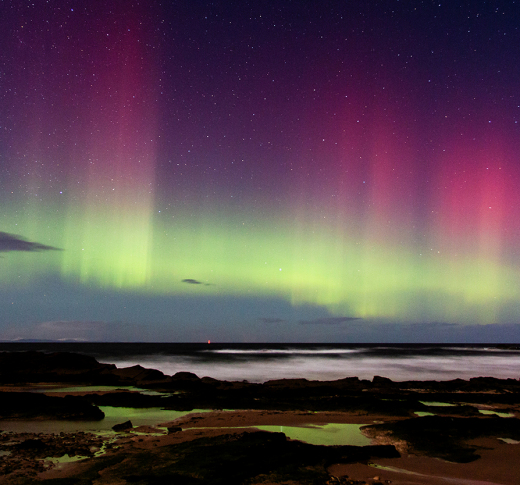
What took so long? The storm waited a whole day while Earth moved deeper into the CME's wake. More than 3 millon kilometers behind the shock front, Earth finally encountered the kind of intense south-pointing magnetic fields that spark geomagnetic storms.

This kind of delay is not unusual. Minor CMEs, like the one that struck on Feb. 9th, often fail to produce a storm on first contact; the initial blow is not enough. The CME's wake can be more effective, sparking storms one or two days later.
Magnetometer readings obtained by Stuart Green in Preston UK highlight the delay between the CME impact on Feb. 9th and geomagnetic unrest on Feb. 10th:
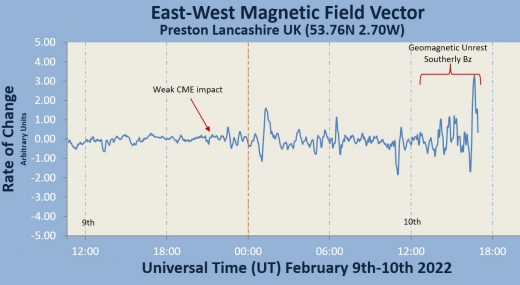
The CME itself caused no obvious ripple in Green's recording. Nevertheless, a storm was coming; G1 conditions were detected for more than 6 hours on Feb. 10th. Interestingly, the Starlink Incident of Feb. 4th was caused by just such a delayed storm.
Comments
Post a Comment
please follow, like and comment